EUR €
Cart
0
How Stress Affects Energy, Confidence & Intimacy
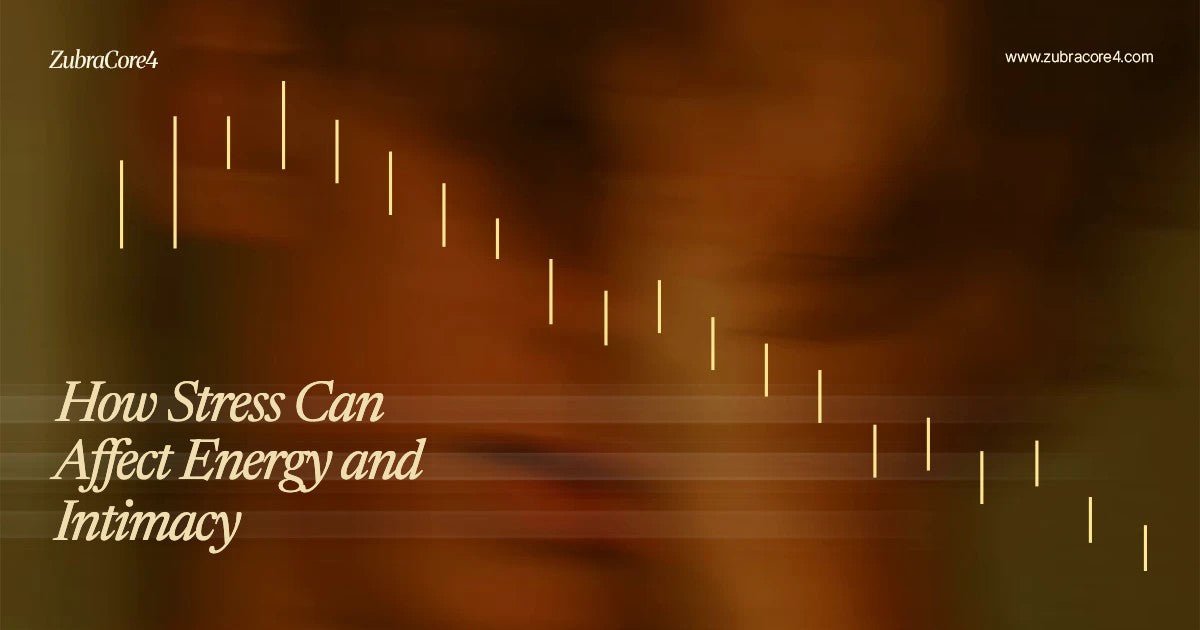
Stress can affect much more than your mood. When the mind is constantly occupied with work, finances, relationships, responsibilities or lack of sleep, it becomes harder to feel relaxed, focused, energetic and emotionally present.
Research has linked psychological stress with changes in sexual functioning in both men and women, although the relationship is complex and varies between individuals.
Key takeaways
- Ongoing stress can quietly drain sleep, energy and confidence.
- Pressure around intimacy can turn into a cycle that feeds itself.
- Small daily habits — sleep, movement, talking openly — help break that cycle.
- Supplements can support a routine, but they don't replace lifestyle or medical care.
For some people, the cycle can look like this:
Stress → poor sleep → lower energy → less confidence → more pressure → less interest in intimacy → more stress

The good news: experiencing this cycle does not mean something is permanently wrong. Stress is only one possible factor, and improving sleep, activity, communication and relaxation can all help support wellbeing.
Stress is not just "feeling worried"
We often use the word stress to describe feeling overwhelmed. But stress is also a physical response. When you sense pressure or a threat, your body shifts gears to help you respond — and your attention moves to the immediate problem rather than relaxation, connection or enjoyment.
That response is useful for a short time. The problem is when everyday pressure becomes constant:
- Work deadlines
- Financial concerns
- Relationship problems
- Family responsibilities
- Poor sleep and long working hours
- Constant phone notifications
All of these contribute to a lifestyle where the mind rarely switches off — and when the mind never gets a break, the body may not feel ready to relax either.
How stress can affect daily energy
One of the most noticeable effects of ongoing stress is feeling tired even when you haven't done anything physically demanding. Stress changes sleep, concentration, mood and daily habits. Someone under work pressure might:
- Go to bed later because they keep thinking about work
- Wake up during the night
- Skip exercise
- Lean more heavily on caffeine
- Eat irregularly
- Spend less time outdoors or with friends
- Feel mentally exhausted by the evening
The result is a strange kind of tiredness:
Your body is at home, but your mind is still at work.
That makes it hard to feel energetic enough for anything else.
The connection between stress and confidence
Stress doesn't always make someone feel physically tired. Sometimes it changes the way they think about themselves. When a person repeatedly feels exhausted or overwhelmed, they may start questioning themselves in other areas of life — and this can become particularly noticeable in relationships and intimacy.
A person might start thinking: "Why don't I feel like myself anymore?" or "Why am I worrying about this so much?"
That kind of self-monitoring adds pressure. Instead of being present in the moment, the focus shifts to whether everything is going "right" — which makes relaxing even harder.
Performance pressure can become a cycle
Intimacy is not purely physical. Sexual response involves the brain, emotions, hormones, nerves, muscles and blood vessels. Stress and mental-health concerns can contribute to erectile difficulties or make them worse — which can create a frustrating loop:
| What happens | What the person may experience |
|---|---|
| Stress increases | More worrying |
| Worry increases | Less ability to relax |
| A difficult experience happens | Confidence decreases |
| Confidence decreases | More anticipation and pressure |
| Pressure increases | Stress becomes stronger |
This is one reason why treating every intimacy concern as a purely physical problem can miss an important part of the picture. Sometimes the first step is simply reducing the pressure around the experience.
Stress affects both men and women
Stress and intimacy are not exclusively a men's or women's issue. Research has found links between psychological stress and sexual functioning in both.
For women, Mayo Clinic notes that stress, anxiety, fatigue, relationship difficulties and emotional wellbeing can all contribute to changes in desire. For men, stress and mental-health concerns can contribute to erectile difficulties or worsen an existing problem.
That's why conversations about intimacy wellness should look at the whole person, not only physical performance.
5 everyday habits that help reduce the pressure
There's no single magic solution for stress — but small habits make a meaningful difference.
1. Protect your sleep
Create a consistent bedtime routine and give yourself time away from work and screens before bed. If your mind is busy, writing tomorrow's tasks down can stop you rehearsing them all night.
2. Move your body
Regular activity supports mood, energy, sleep and general wellbeing. It doesn't have to mean an hour in the gym — a walk after dinner, cycling, stretching or a short strength session is a realistic start.
3. Create a transition between work and home
Stress follows people home when there's no clear break between the two. Try a small ritual that tells your mind the workday is over:
Finish work → short walk → shower → dinner → phone away
The goal isn't a perfect routine — it's a signal.
4. Talk instead of assuming
People often go quiet when they're overwhelmed. A partner may read that silence as rejection, and you may read their reaction as pressure — and suddenly both people are reacting to assumptions. A simple sentence can interrupt that cycle:
"I've been under a lot of stress lately, and I don't want you to think it's about you."
Open communication is also what Mayo Clinic recommends when relationship and sexual concerns are affecting intimacy.
5. Take the pressure away from the outcome
A romantic evening doesn't need a specific outcome. You can:
- Cook together or share a cup of tea
- Take a walk or watch a film
- Have a real conversation
- Give each other a massage
- Spend time together without phones
Physical intimacy may happen naturally — or it may not. Both are okay. The objective is connection, not performance.
Can natural ingredients help with stress?
Natural ingredients may play a small supporting role, but they are not a stress treatment, and it helps to separate wellness support from medical treatment. Ingredients such as maca and Panax ginseng are common in traditional and modern wellness products, but the evidence is mixed. A systematic review of randomized clinical trials on ginseng and fatigue found results varied by population and preparation, with overall effects limited or inconsistent.
That's exactly why responsible brands should avoid promises like:
- Guaranteed performance
- Instant results
- "Cures stress"
- "Fixes erectile dysfunction"
- "Increases testosterone instantly"
Instead, look for transparent ingredient lists and realistic positioning.
Where ZubraCore4 fits in
ZubraCore4 is a honey-based food blend for men 21+, made with 12 natural ingredients including maca root, Panax ginseng, royal jelly and bee pollen. Rather than a solution to stress or intimacy concerns, it's best seen as one part of a broader wellness routine:
Good sleep + regular movement + balanced nutrition + stress management + emotional connection + considered food choices
No single product can replace all of these. And if you have a persistent health or sexual-health concern, speaking with a qualified healthcare professional is more appropriate than relying on any single product.
What to do if stress is affecting intimacy
Start with one simple question: what has changed recently? Look at:
- Sleep and workload
- Relationship stress
- Exercise and diet
- Medication
- Alcohol or smoking
- Mood and general health
- Major life changes
The answer often becomes clearer once you see the bigger picture. If difficulties are persistent, distressing or come with other symptoms, professional medical advice is important — sexual difficulties can have both physical and psychological causes.
A simple 30-minute evening reset for couples
10 minutes — Disconnect. Phones away. No work emails, no social media. Just give your attention to each other.
10 minutes — Talk. Ask "How was your day — really?" and listen without rushing to solve anything.
10 minutes — Reconnect. Make tea, take a short walk, sit together, hold hands, talk about something unrelated to work.
The goal isn't to manufacture intimacy — it's to create the conditions where connection can happen naturally.
When stress needs more than lifestyle changes
Stress is common, but persistent symptoms shouldn't be dismissed as "just stress". Consider speaking with a healthcare professional if you experience:
- Persistent sexual difficulties or big changes in desire
- Ongoing exhaustion or severe sleep problems
- Persistent anxiety or low mood
- Pain during sexual activity
- Symptoms that started after a new medication
- Other unexplained physical changes
Frequently asked questions
Can stress reduce energy?
Yes. Ongoing stress is associated with poor sleep, mental fatigue, changes in daily habits and lower overall wellbeing.
Can stress affect intimacy?
Yes. Research indicates psychological stress can interfere with sexual functioning through both psychological and physical pathways.
Can stress cause performance anxiety?
Stress and worry can feed a cycle of self-monitoring and pressure, especially when someone becomes concerned about how they will perform.
Is low energy always caused by stress?
No. Fatigue can have many causes, including sleep problems, medication, nutrition, medical conditions and lifestyle.
Can anything you take replace stress management?
No. Nothing you take, whether a supplement, a food blend or a herbal product, replaces sleep, exercise, good food, healthy relationships or appropriate medical care.
When should I speak with a healthcare professional?
If fatigue, sexual difficulties, pain, mood changes or other symptoms persist or cause significant distress, professional evaluation is appropriate.
The bigger picture
Stress doesn't always announce itself. Sometimes it looks like tiredness, sometimes irritability, sometimes losing interest in things you normally enjoy — and sometimes it shows up in the relationship you care about most.
Instead of asking "What's wrong with me?", it can be more useful to ask:
"What do my body and mind need right now?"
Sleep better. Move more. Talk openly. Reduce pressure. Make time for connection. That shift — from pressure to understanding — is where better everyday wellbeing, and a healthier relationship with intimacy, begins.
12 natural ingredients
Shop ZubraCore4
Ready to start your race?
Plain box, no labels, and a 21-day money-back guarantee on unopened bottles.
This article is for general education only and isn't medical advice. ZubraCore4 is a honey-based food blend, not a medicine, and is not intended to diagnose, treat, cure or prevent any disease. If you have a medical condition or take medication, speak with a healthcare professional before use.