EUR €
Cart
0
What Happens When a Man Takes Maca Root?
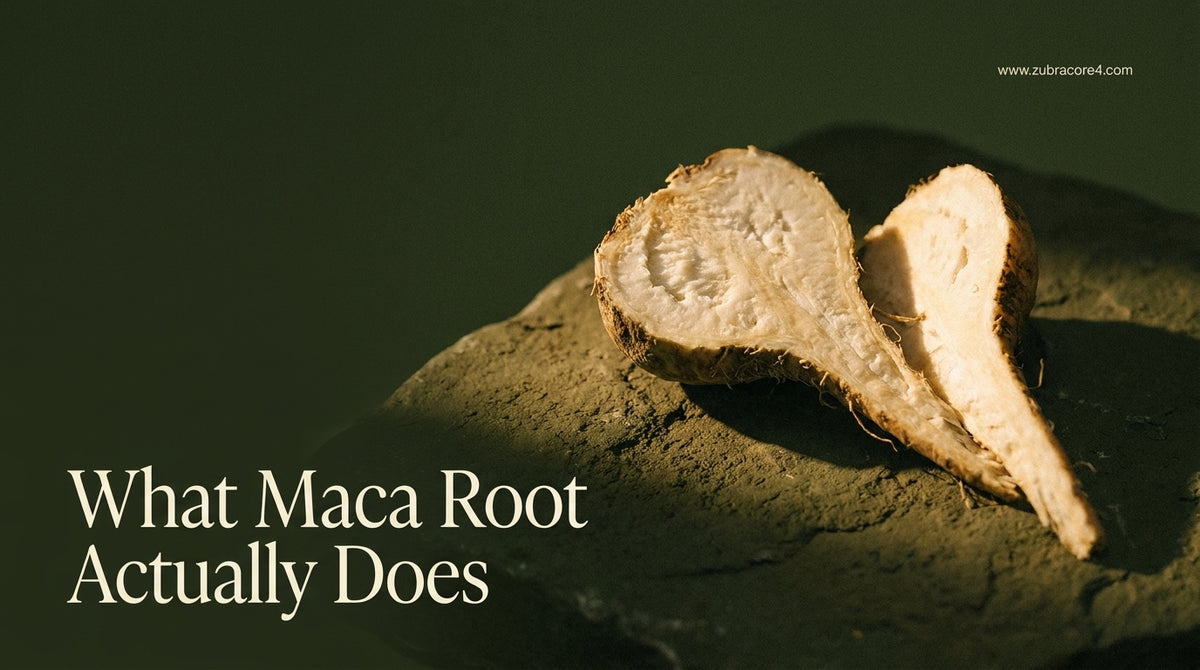
Maca root benefits for men have been studied for years — particularly around energy and libido — but the evidence is still limited and the effects are modest. It is a root vegetable from the Peruvian Andes, not a drug, and the research on it, while genuinely interesting in places, is still pretty early. Here is an honest look at what it may do, what it probably does not do, and what to realistically expect if you decide to try it.
What does maca root do for men?
Maca (Lepidium meyenii) is a root vegetable, not a pharmaceutical. It grows at high altitude in the Peruvian Andes, where it has been cultivated as both a food crop and a traditional remedy for a very long time. Think of it like ginger or turmeric — a plant with centuries of use that researchers are only now studying in formal trials.
It comes in three main color varieties: yellow, red, and black. Each has been studied for slightly different things, which matters when you are trying to figure out which type to buy. You will find it sold as a powder you stir into food or drinks, as capsules, or as an ingredient inside a broader food blend.
Traditionally, maca has been used to support energy, stamina, and libido — but "traditionally used for" is not the same as "proven to do." A comprehensive review published on NIH's PubMed Central looked at the available research and found the evidence is limited and mixed across most areas. Medical News Today's overview of maca's health benefits covers a broader range of areas researchers have explored, from energy and mood to bone health.
Research has looked at libido, sperm quality, and mood in men. Some of those findings are mildly encouraging. But one thing the current evidence is fairly clear on: maca does not appear to significantly raise testosterone levels. If you have seen products marketed on the idea that maca "boosts T," that claim runs ahead of what the science actually shows.
Maca is sometimes described as an adaptogen in traditional use, which means it has historically been associated with helping the body handle stress and fatigue. That is a traditional framing, not a proven pharmacological mechanism. It works on the body differently from a hormone or a drug.
What happens when a man takes maca root every day?
At normal food amounts, daily use appears to be well-tolerated for most men based on current evidence. The research that exists used consistent intake over several weeks to a few months — which tells you something important: any changes, if they happen at all, are not going to show up after a few days. This is not a fast-acting compound.
Anecdotal reports from men who have tried it vary a lot. Some say they noticed something after a few weeks of consistent use. Others report little to no effect. That kind of individual variation is typical for a food ingredient with modest, preliminary evidence behind it. Going in expecting a quick, obvious shift is likely to leave you disappointed.
Long-term safety data at higher doses is limited, so sticking to typical food-level amounts is the reasonable approach. If you have a thyroid condition, check with your doctor first.
How long does maca root take to work?
The research that found any effect used consistent intake over several weeks to a few months — do not expect to notice anything in the first few days. Individual responses vary quite a bit, and some men report little change at all. That is an honest reflection of where the evidence sits right now, not a reason to dismiss maca entirely.
Healthline's overview of maca root notes the same pattern: the studies that found any benefit ran for several weeks, not days. Patience and consistency matter more than dose size.

Which type of maca root is best for men?
Black maca has been studied most specifically for male concerns, particularly around sperm motility and energy. If those are the areas you are most interested in, black maca is the variety researchers have focused on most for men.
Yellow maca is the most widely grown and the most broadly researched variety overall, so it shows up most often in general studies. Red maca has been looked at in the context of prostate health, but mostly in animal studies — the human evidence there is thin.
No single variety is definitively the best choice for every man. It depends on what aspect you are most interested in, and honestly, the evidence for all three is still early-stage enough that the differences may be less dramatic in practice than they sound on paper.
Are there side effects or safety concerns for men?
At typical food amounts, maca is generally considered well-tolerated. Some men report mild digestive discomfort, particularly when they first start using it or take it on an empty stomach.
One area worth paying attention to: maca contains glucosinolates, compounds that may affect thyroid function. The NIH PMC review notes this as a reason for caution, citing earlier research, particularly for anyone with an existing thyroid condition. If thyroid concerns apply to you, talk to your doctor before adding maca to your routine.
The NCCIH maca page — from the NIH center that evaluates complementary health approaches — is a useful US-authoritative reference specifically on maca safety if you want to read further.
There is also not enough long-term safety data on very high doses to say with confidence that more is better. Sticking to amounts consistent with normal food use is the sensible approach for now.
If you have a hormone-sensitive condition, are taking any medication, or notice unexpected changes after starting maca, speak with your primary care physician or a urologist before continuing. That is just the practical thing to do. The Mayo Clinic's page on erectile dysfunction is a useful starting point if any of your concerns overlap with that area.
What about maca root and sexual health — what does the science say?
Some small studies suggest maca may support self-reported libido in men, according to the NIH PMC review. That is worth knowing, but "self-reported libido in a small study" is a long way from a treatment for any condition. The evidence is preliminary and not conclusive.
Maca is not a treatment for erectile dysfunction or any other medical condition. If ED is a genuine concern for you, the Mayo Clinic has a clear, practical page on erectile dysfunction that covers causes, lifestyle factors, and when to see a doctor.
One more thing worth knowing: the FDA has issued repeated public notifications about so-called sexual enhancement products — including some marketed as "enhancement honey" — that were found to contain hidden prescription drugs. The FDA's health fraud notifications page lists many of them by name. Maca as a food ingredient is a completely different category from those adulterated products, but it is worth being aware of that space if you are shopping around. This article on whether male enhancement pills are safe goes deeper on that if you want more context.
How should men take maca root?
Maca powder is easy to add to a smoothie, oatmeal, or coffee. Capsules are more convenient if you travel a lot or just do not want to deal with the slightly earthy taste. Either way, look for a product whose ingredient list you can actually read and understand.
If you want maca as part of a broader blend of traditional ingredients rather than on its own, ZubraCore4 is a food blend that includes maca alongside other traditional botanicals; it comes in 20 ml portions, and you let an amount settle on the tongue about 20 to 25 minutes beforehand rather than swallowing it straight away. It is taken when you want it, not on a daily schedule. As the founder explains: "Maca is one of the traditional botanicals we built the formula around, alongside ginger and ginseng. Before adding it, we wanted to understand what it is, why it belongs in the blend, and whether the finished product meets the right quality standards. A long ingredient list isn't automatically an impressive one, so nothing goes in just to make the label look longer."
Whatever form you choose, the research that exists used consistent intake over several weeks — not a single large dose. And if you have specific health concerns driving the interest, a conversation with your doctor is always the more useful starting point.
Frequently asked questions
What happens if I take maca every day?
At normal food amounts, daily use appears to be well-tolerated for most men based on current evidence. That said, long-term safety data at higher doses is limited, so sticking to typical food-level amounts is the reasonable approach. If you have a thyroid condition, check with your doctor first.
How long does maca powder take to work?
The research that found any effect used consistent intake over several weeks to a few months. Do not expect to notice anything in the first few days. Individual responses vary quite a bit, and some men report little change at all — that is an honest reflection of where the evidence sits right now.
Which maca root is best for males?
Black maca has been studied most specifically for male concerns like sperm motility and energy. Yellow maca is the most widely researched variety overall. Red maca has been looked at for prostate health, but mostly in animal studies. There is no single definitive answer — it depends on what you are most interested in, and the differences between varieties in practice may be smaller than they appear.
Does maca root help with body composition or thickness?
This is a common question, and the honest answer is that the evidence for maca affecting body composition in men is not there in any meaningful way. Maca has been studied for energy, libido, and sperm quality — not for changing how a man's body looks or its physical dimensions. Claims in that direction are not supported by current research.
Does ZubraCore4 contain maca?
Yes. ZubraCore4 is a food product, and maca is one ingredient among several traditional botanicals in the blend. It is not designed or marketed as a treatment or solution for any health condition. As the founder puts it: "ZubraCore4 is for adults who appreciate a straightforward approach to men's wellness and want to make informed choices about the products they use. We're here for grown-up choices, not fairy tales in a bottle."
This article is for general education only and isn't medical advice. ZubraCore4 is a honey-based food blend, not a medicine, and is not intended to diagnose, treat, cure or prevent any disease. If you have a medical condition or take medication, speak with a healthcare professional before use.